
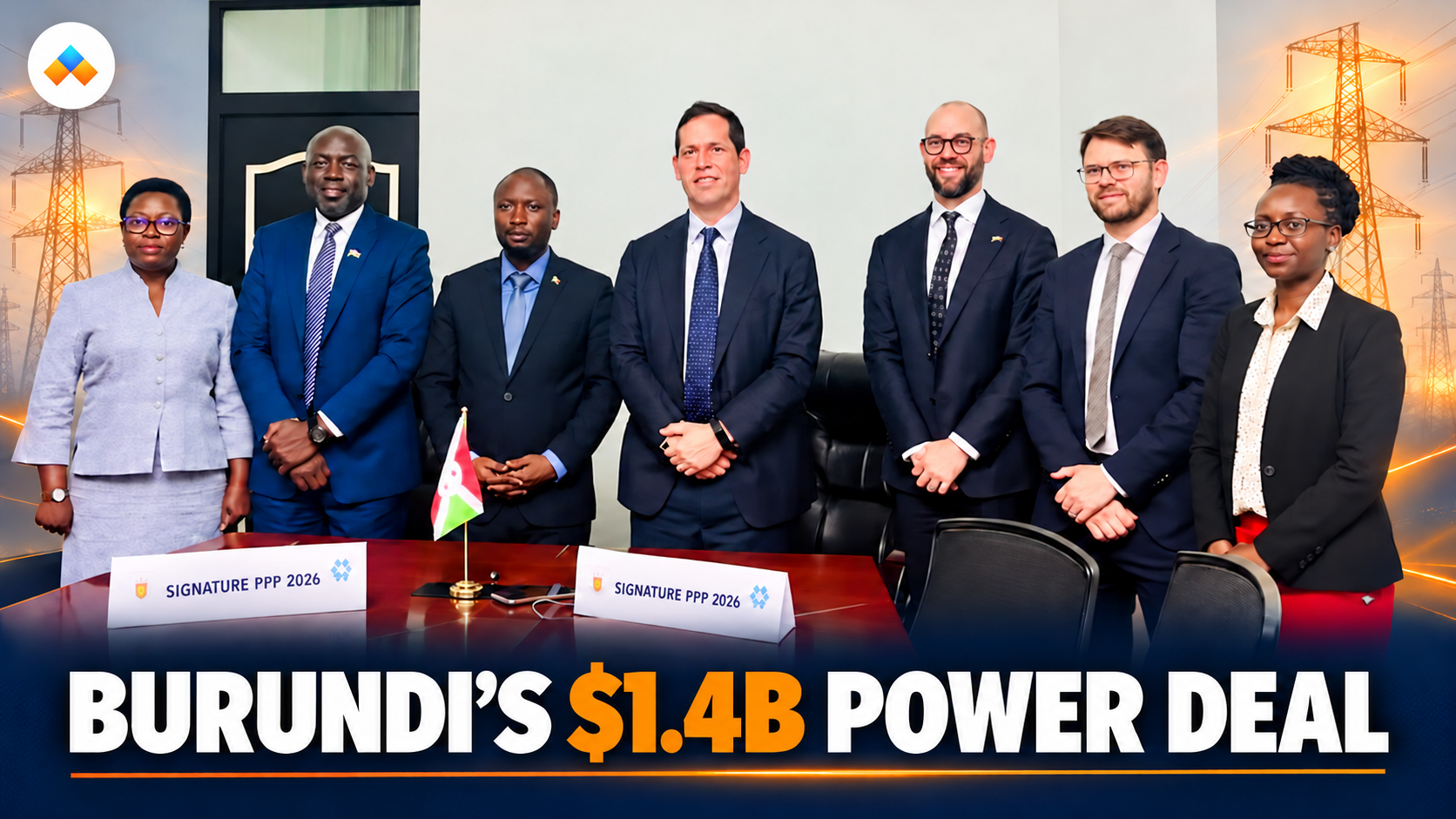
Burundi’s $1.4B power deal: a major promise, with details to watch
Burundi has signed a 25-year public-private partnership with Weza Power, an Anzana Electric Group company, to expand the country’s electricity network. The partners say the deal is expected to mobilize $1.4 billion—but that figure is not a $1.4 billion U.S. government grant. The financing is intended to combine private and concessional capital.
Why it matters: More reliable electricity could help households, schools, clinics and businesses. But the announcement is a long-term plan, not proof that power has already reached more people.
The big picture: The partnership is designed to extend or improve electricity access for millions of Burundians. The companies behind it say their goal is to reach more than half the country by 2030, including through new and upgraded distribution lines and connections.
⚡ What’s in the deal
The agreement was signed on October 16 between the Government of Burundi and Weza Power. Anzana says the 25-year partnership will mobilize $1.4 billion for national electrification and establish a private operator for electricity distribution at national scale.
The U.S. State Department’s announcement described a more ambitious target: raising the electrification rate from 12% to 70% over several years. But the companies’ published figures describe a goal of moving from around 15% access today to more than 50% by 2030. Those are different baselines and targets, so the precise goal—and how progress will be measured—needs clarification.
👀 What to watch
The headline investment number is only part of the story. The practical test will be how the financing is assembled, where construction begins, how quickly new connections are made and whether electricity is dependable and affordable.
The partners have also cited projected outcomes including more than 1.2 million new household and business connections and thousands of jobs. These are expectations tied to the project—not results already delivered.
The bottom line: The agreement could become a major step toward expanding electricity access in Burundi. Its impact will depend on financing, construction and delivery—and on whether the ambitious targets translate into reliable power for communities.
What we’re watching: The first implementation milestones, the confirmed access target and the neighborhoods and regions set to receive connections first.