
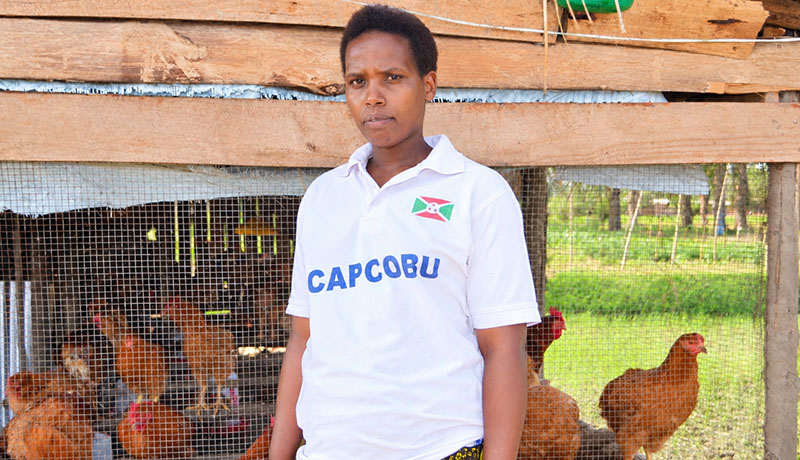
How one fishpond became a farming cooperative in Burundi

Photo: Iwacu, used with permission.
When Gérardine Irakoze finished studying business computing, she struggled to find work. She used her phone to learn how to raise fish alongside rice, shared the idea with other young people in Buramata, and pooled resources with them to start with one fishpond. By November 2026, she told Iwacu that the group had grown to about ten ponds.
Irakoze helped start and now leads the Buramata farming cooperative, known as CAPCOBU. The group grows rice, raises fish and chickens, and runs a rice mill that local growers can use.
How did the cooperative grow?
The group began with a small plot. Yaga Burundi and Iwacu reported that Burundi’s youth employment program, known by its French acronym PAEEJ, gave the cooperative an 8 million BIF loan. The group used the loan to expand its operation to about 2,500 square meters. Both outlets reported that the loan was repaid.
Why raise fish alongside rice?
A member of the cooperative told Iwacu that the fish feed on some of the algae and small plants in the rice fields. The fish waste adds nutrients, and the group also uses manure from its chickens to fertilize crops. The cooperative can raise fish and grow rice on the same land.
What does the rice mill do for local growers?
Growers can bring their harvest to the cooperative to have the husks removed. Buramata’s local leader told Iwacu that the cooperative charged 60 BIF per kilogram at the time of reporting, less than other mills he cited. The cooperative also uses the leftover rice bran to feed its animals.
What comes next?
Irakoze told Iwacu she wants the cooperative to expand onto more land. She also wants more young people to use the internet to learn skills they can put to work locally. In Buramata, that approach has already taken the group from one pond to a farm and a mill that serves other growers.